

Getting closer to customers and maintaining good communication through surveys is also one way to extend the life of a business and enhance diner experiences. By providing the best service and listening to customer suggestions and criticisms about the company, especially restaurants, an owner can improve the quality of service and enhance the guest experience in the future. In this case, restaurant marketing automation is a good solution to overcome the problem of the communication bridge between restaurants and customers.
Have you heard of restaurant marketing automation and how it can be a powerful tool for reaching more customers? Read this article to find out brief information about related topics!
What is restaurant marketing automation?
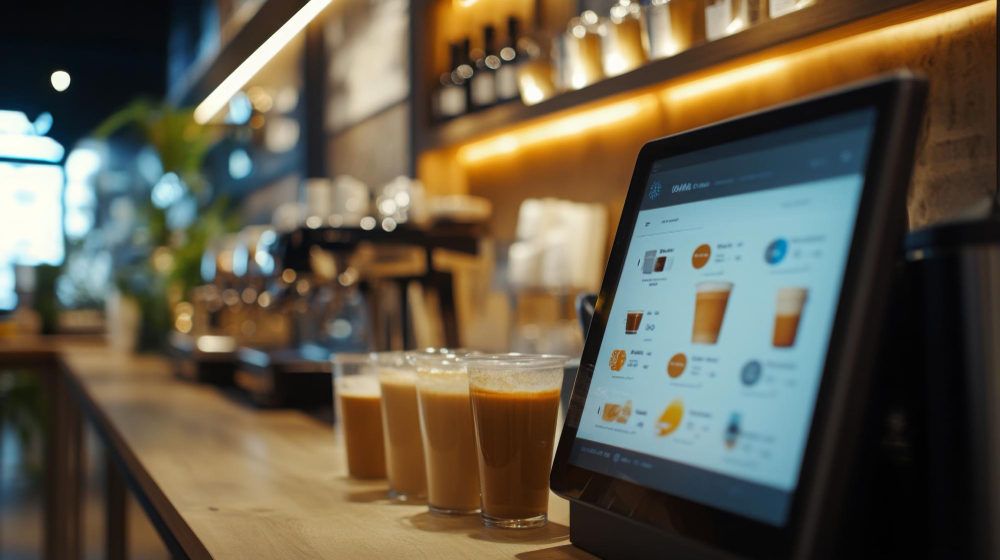
Restaurant marketing automation aims to discover customers’ needs and help us know their perspectives and what they want. It uses various data collection tools, such as social media, EPoS, SMS, customer relationship management (CRM) systems, and email marketing. By leveraging software and technology, restaurants can automate repetitive marketing tasks, personalise customer interactions, and gain valuable insights into guest behaviour. This comprehensive approach allows restaurants to focus on delivering exceptional dining experiences while optimising their marketing strategies for maximum impact.
Primary benefits
Enhanced customer interaction
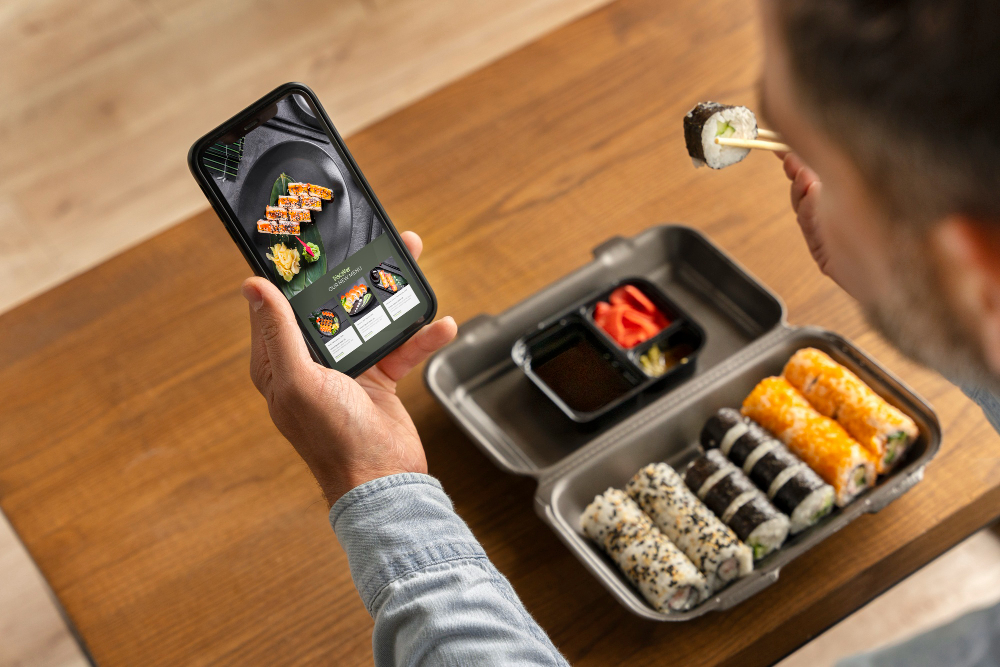
By providing tools that provide a place for customers to give their opinions about food reviews, suggestions, criticisms, and input, there is communication between the restaurant and the customer. If communication and interaction go well, the restaurant business will continue to grow and produce maximum customer products and services.
Improved operational efficiency
Sometimes, we do not know the preferences and tastes of people who become a target market, which can be varied and unique. In-depth research is needed so that our restaurant business can fulfil customer desires and compete well with other industries. However, by using restaurant marketing automation, we can save time by getting this important information through data collection and implementing AI-powered solutions.
Data-driven insights
With restaurant marketing automation, we can easily use technology and tools to collect important data such as customer contact information, purchase history, website app behaviour, and social media interactions. With this data, restaurant owners utilise the marketing platform to analyse customer segmentation, customer journey mapping, and campaign performance analysis. These data also provide insight into how restaurants can enhance their marketing in many ways.
How to use marketing automation in your restaurant
Define your goals
Before using restaurant marketing automation, you must analyse the needs and top priorities to get the appropriate marketing results and achieve the expected results. By examining the main goals and priorities, the strategies that will be used will be in line and efficient.
Gather customer data
Data collection is also essential for various things, such as segmentation and knowing their needs so that businesses can fulfil customer desires. Ultimately, companies must adjust to customer desires and provide the right time and best quality. Therefore, it is necessary to collect customer data to analyse market needs.
Choose the right tools
The variety of restaurant marketing tools helps you understand which tools are most needed by your restaurant. For example, suppose you target young people and have a cafe business. In that case, maximising social media to become the leading platform for communicating with customers will be very good. You can also use restaurant email marketing to maximise that communication.
Integrate with your electronic point-of-sale system.
Restaurant marketing automation integrates seamlessly with your restaurant POS system to create a powerful synergy that improves operational efficiency and customer engagement. This integration allows restaurants to capture valuable data, personalise marketing efforts, and drive revenue growth through customisable strategies that enhance direct online orders. It will enable you to collect real-time data, synchronise data, and create profitable personalised marketing campaigns.
Create automation workflows
Creating automation workflows in restaurant marketing involves establishing a series of automated tasks that send specific messages based on customer behavior, effectively putting your marketing efforts on autopilot. For instance, when a customer makes a reservation, an automated workflow might send them a confirmation email followed by a reminder as the date approaches. These workflows can save time, ensure consistency, and enhance customer experiences by delivering timely and relevant communications without manual effort. Ultimately, this can improve your restaurant’s reputation management.
Follow the analytics
Analysing automated marketing strategies is required to know what customers want nowadays. Business fluctuates and has also trended at different times. Therefore, a business person must be able to analyse market conditions and trends using third-party tools to adapt and follow these changes to attract more customers and encourage them to make repetitive purchases.
Monitor and improve
In the process of restaurant marketing automation, regular monitoring and evaluation of marketing software is also needed to find out what types of marketing are suitable and maximised in the future. Sometimes, some types of marketing don’t work well in a restaurant, so testing and monitoring are needed to find the best option to improve the business.
Training
In addition to maximising tools and software technologies in the marketing automation process, the role of staff is also significant in achieving the best results for the restaurant. However, staff must also undergo restaurant staff training, which is essential for effectively utilising restaurant marketing tools. Understanding marketing automation and how to apply it involves utilising restaurant marketing platform features so that your restaurant business runs more smoothly and minimises any problems or losses.
Key tools for restaurant marketing automation
Email Marketing
With its simple mechanism due to easy-to-use templates, email marketing is one of the key tools that can be the best option because you are undoubtedly familiar with email. Email marketing for restaurants can be enhanced by using automated marketing strategies to reach customers at the right time, get customer reviews, or share the latest information from your restaurant for promotion.
Social Media Automation
Good branding on social media is necessary to increase your restaurant’s visibility. In addition, optimise your business’s social media for other purposes, such as engaging with customers and analysing traffic by utilising available analytics tools. Moreover, social media is the most popular marketing platform because it reaches many people.
CRM Systems
A CRM (Customer Relationship Management) system is a valuable marketing automation tool for restaurants. It centralizes customer data, tracking interactions, preferences, and purchase histories for personalized communication. A CRM enhances customer engagement and loyalty by automating tasks like sending emails and special offers, ultimately improving retention.
Tips for integrating automation with point of sale systems
Ensure compatibility
To run a good and smooth data flow, compatibility is needed in the process and operations, especially when integrating with online sales systems. You must determine if your marketing automation is compatible with your restaurant’s online ordering system and point of sale (POS) system. Your marketing process will also run successfully if it runs well and can run the business well.
Harness APIs for integration
APIs (Application Programming Interfaces) enable different software systems to communicate and share data. Integrating APIs can enhance marketing by connecting tools with your online ordering system for restaurants.
For example, APIs allow you to link customer relationship management (CRM) systems, loyalty programs, email marketing, point of sale (POS) systems, and reservation platforms. This consolidation of customer data provides a clear view of each guest’s experience.
Validate the integration
After integrating APIs to enhance your restaurant’s marketing efforts, it is essential to validate the integration to ensure everything operates smoothly. First, confirm that data flows correctly between the systems you have integrated. Additionally, observe how your customers engage with your marketing systems after the integration. The goal is to provide a seamless and positive experience for your customers.
Monitoring and adjusting
Every marketing process must evolve and adapt to keep up with changing circumstances. By regularly monitoring and adjusting automated marketing efforts, a business can enhance and optimise its operations more effectively. Therefore, it is crucial to conduct regular monitoring and not overlook its importance.
Ensuring data security
By using tools that aim to collect a lot of customer data, every restaurant business that uses marketing automation must have safeguards to protect personal information from customers. One way to keep data safe is to update the marketing software frequently to mitigate vulnerabilities.
Frequently Asked Questions
What type of marketing do restaurants use?
Restaurants use various marketing strategies to attract new customers and retain loyal customers. They use many ways, from traditional marketing, such as traditional advertising like Billboards, radio, or print ads, for promotions and discounts. But modern marketing, such as social media marketing and Search Engine Optimization (SEO), is also starting to develop.
Does marketing automation work?
Yes, marketing automation can be highly effective, especially for restaurants that have repetitive tasks and need to manage large customer bases with the help of restaurant email marketing. It can help restaurant managers streamline marketing processes like email campaigns, social media posts, or loyalty programs, freeing up time for other tasks. Thus, marketing automation is also a great way to engage customers through personalised messages.
Why does marketing automation fail?
If automation is used without clear objectives or a strategy, it can become a waste of time and resources. The automation should align with the restaurant’s overall marketing and business goals. Moreover, while marketing automation can be highly effective for restaurants, it requires careful planning, attention to customer needs, and a balanced approach.
Conclusion
As the restaurant industry evolves, leveraging marketing automation can offer a competitive advantage. It helps businesses connect with their audience, optimise efforts, and deliver value efficiently. When implemented effectively, marketing automation is more than just a tool but a robust strategy that can drive growth, enhance customer relationships, and increase a restaurant’s success in a competitive market.
For more informative and comprehensive insights on managing your restaurant business, contact SEO for restaurants!