

Delivery orders are crucial for restaurants, enabling them to cater to a broader customer base and provide delivery services. Customers prefer to dine at a restaurant and appreciate the option to order food for delivery, a service that delivery companies can efficiently offer online. This benefits the customer and gives the restaurant a significant edge in reaching more people with their offerings.
But with this advantage, how much is a delivery fee needed for your restaurant?
What is a delivery fee?

A delivery fee is a cost incurred to facilitate indirect ordering at a restaurant, often categorised as a service fee. It plays a crucial role in enabling a restaurant to offer delivery services, especially when using a delivery platform with various features, such as Grubhub or Uber Eats, which can streamline the work of delivery drivers.
Despite the high fees, delivery platforms remain essential because they provide instant visibility, streamlined logistics, and access to a broader audience, especially for restaurants that lack the internal capacity to manage their delivery operations. However, you need to know which delivery fee platform suits your restaurant with many considerations, including the flat fee versus commission structure and the potential for higher delivery costs.
What delivery options do restaurants have?

Here are the delivery options for your restaurant that you need to know, each with its unique advantages and associated delivery costs, including tips for delivery drivers. This information will empower you to make the best decision for your business.
Third-Party Delivery Fee for Restaurants
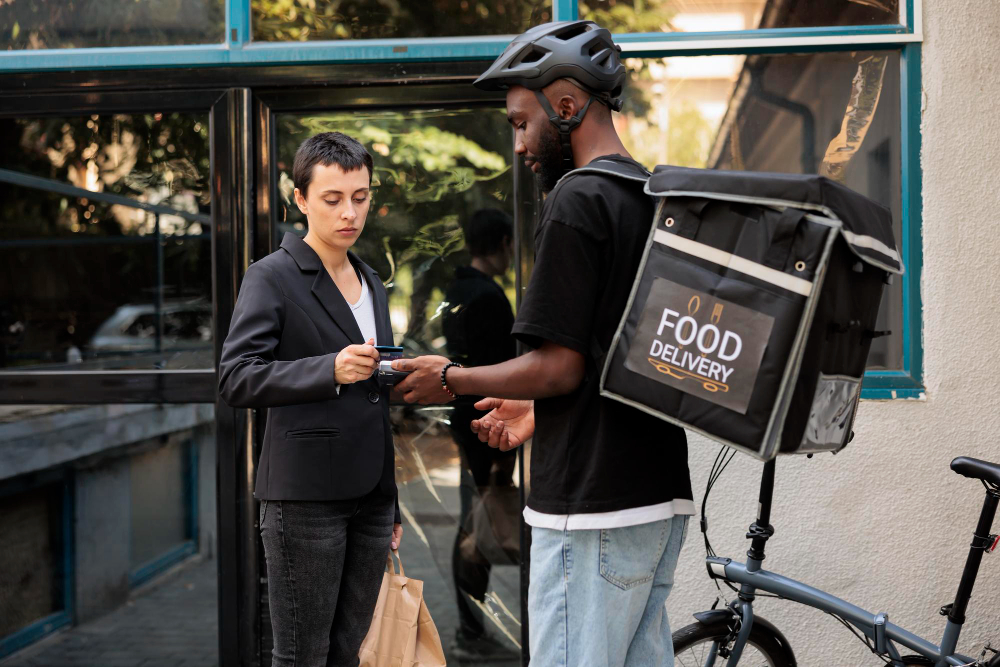
Using a delivery company is beneficial because it can significantly benefit the restaurant and enhance delivery efficiency. For example, it gives visibility to other customers and increases marketing and sales for your delivery business. You will also provide an easy system and process for customers to quickly order through delivery apps (estimated 15 to 30 minutes).
However, some restaurants do not use third-party delivery platforms in the long run because they charge high fees, ranging from 10% to 30% of the total order.
In-House Delivery Fee for Restaurants

Unlike third-party platforms, in-house delivery fees are a type of delivery directly operated by the restaurant. It gives you complete control over the process, ensuring a more cost-effective option for delivery fees and making you feel secure and in charge.
In-house Ordering System with On-Demand Delivery – Delivery Fee and More
This ordering-to-delivery system is very similar to the in-house delivery fee because the restaurant handles the ordering-to-delivery process. The difference is that you hire external independent contractors to help the restaurant manage the ordering system with a per-order fee. This system is suitable for your restaurant if you don’t have other staff to manage the delivery system and don’t have too much cost.
Why Is Food Delivery So Expensive? How Much to Charge Your Customers?
Most delivery platforms charge a considerable fee due to many considerations. However, they also offer many beneficial things to restaurants, such as increasing visibility and providing easier and more efficient access to many customers. Despite the high fees, the profit potential should keep you optimistic and motivated to make your delivery system successful.
What Do Restaurant Delivery Fees Cover?
Delivery fees are quite expensive, costing $3-5. You may wonder what the fee covers. The restaurant delivery fee covers many important things in the process.
There are driver fees for delivery services, technology if the delivery system is done with the best online ordering system that many people commonly use, restaurant insurance to provide insurance to drivers and vehicles, and administration that covers the administrative needs.
How to Reduce Delivery Fees?
To simplify your delivery system with a third-party platform, try integrating your website with a reliable independent delivery fleet like Flipdish or ChowNow, popular delivery apps. These commission-free platforms offer a cheaper platform, which can help lower your service fee. This provides scalability, customer ownership, and reduced commissions while keeping deliveries available.
Choose the Delivery Structure That’s Right for Your Business
All restaurants should use delivery fees wisely and thoughtfully to enhance their delivery business. You need to know your needs and priorities before utilising a delivery system in the industry. If you are a small business and still don’t have much to pay for a delivery platform, an in-house delivery fee or ordering system might be the right thing to do to save on service fees.
However, if your restaurant already has a stable profit and wants to expand its target customers, a delivery platform will help you achieve those goals.
Frequently Asked Questions
What is a typical delivery fee?
Delivery fees typically range from $3 to $6 per order, depending on the platform, location, and distance. Customers pay this fee to help cover driver compensation and logistics. Some services may increase fees during peak times or for longer distances.
What are the average restaurant delivery fees?
Restaurants using third-party delivery platforms like Uber Eats or DoorDash generally pay an average delivery fee of $3 to $6. However, the real cost comes from commission fees ranging from 20% to 30% per order and significantly affecting profit margins.
What is the handling fee for delivery?
A handling fee for delivery is an additional charge separate from the base delivery fee. It helps cover costs like order processing and packaging. Typically ranging from $1 to $3, handling fees may not be disclosed upfront, affecting the total at checkout.
Conclusion
Delivery fees play a crucial role in the restaurant delivery ecosystem, balancing restaurant owners’ financial needs with customers’ expectations of convenience. Restaurants must incorporate these fees to cover operational costs and remain competitive to meet customer expectations.
By being transparent about delivery charges and consistently evaluating the best options for their business and customers, restaurants can improve customer satisfaction while maintaining healthy profit margins. Whether they choose to use a third-party delivery service or manage deliveries in-house, restaurant owners must stay informed about the changing landscape of delivery fees and adjust their strategies accordingly.