

Understanding how much do restaurants spend on ingredients is crucial for restaurateurs looking to manage their budgets effectively. Many restaurants fail to perform calculations and planning properly, resulting in a decrease in profits. What every restaurant owner needs to do is research various aspects, including determining the correct spending cost for ingredients to maximise profit from their total food costs. Therefore, here is an explanation of how much you should spend on ingredients and how to manage or calculate the food cost.
What is the True Cost of Food?

The actual cost of food is the basic expense of producing a product that will later become a menu item in a restaurant. However, not only is the costing derived from ingredients, but the actual cost of food also includes the preparation time, storage, labour to make the product, and food waste during trial production. Knowing the actual food cost and managing it effectively can help you avoid various significant losses. Therefore, it is essential to list and analyse all your needs to ensure they fit within your restaurant’s budget.
What is the food cost percentage?
To calculate a reasonable cost and portion, a food percentage is required. This is to avoid significant risks, such as food waste and excessive food spending. Every restaurant owner is strongly discouraged from estimating food cost without the correct formula to calculate the actual food cost percentage. You can set the cost by dividing the cost of goods sold (COGS) by total food sales, then multiplying by 100. Moreover, a typical food cost percentage is around 28-35%, but this can vary depending on the type of restaurant and its location.
Benefits of Calculating Food Cost Percentage

Implementing food costing with the right strategy will significantly benefit your restaurant and enhance its profit margins. Here are the benefits of calculating food cost per menu item in your restaurant.
Menu Optimisation
By calculating the cost percentage well, you can optimise the menu better. For example, if a menu is not making a good profit because it is too expensive, you can optimise the menu by reducing the cost of ingredients or portions of food. It helps the restaurant enhance its menu to target more customers while keeping track of both beginning and ending inventory.
Improved Profit Margins
Besides optimising the menu, accurately applying food costing formulas also helps to improve restaurant profit margins in the long run. In addition to food costs, you also need to continually monitor restaurant expenses and regularly evaluate them to increase profits.
Enhanced Budget Management
Every restaurant must have a budget management and planning system in place for its marketing strategy. By conducting proper reviews and planning, restaurants can prevent over-purchasing, better plan their inventory needs, and allocate resources more effectively across other business areas, ultimately reducing actual costs. In addition, budget management can also make you more aware of restaurant finances so that you can compete with other restaurants.
Waste Reduction
Many restaurants make purchases from suppliers in excessive quantities or maintain inventories with an overabundance of items, which complicates their inventory management. This massive purchase can lead to high risks, such as food waste, which means wasting a lot of food and not utilising existing ingredients according to portion sizes. To avoid this happening in restaurants, it is essential to calculate how much restaurants spend on Ingredients and obtain the exact amount of food needed.
Investor Confidence
Numerous factors can help restaurants grow, one of which is having investors or gaining their trust. However, investors do not necessarily choose a restaurant, they will give more trust to restaurants that can manage budgets and costing safely and adequately. Therefore, accurate food costing is crucial for your restaurant’s future growth.
Step-by-Step Guide to Calculating Food Cost
To develop a successful food costing strategy, follow a step-by-step guide to create a strategic approach to reducing restaurant costs, including accurate food cost calculation.
Determine Total Cost of Goods Sold (COGS)
The first step in calculating food cost is to determine the ingredient cost for each menu item or the total cost of goods sold (COGS). This includes the total cost of all food and beverages sold, encompassing the expenses for ingredients and packaging. COGS provides a clear picture of how much money is spent directly on producing food.
Calculate Total Food Sales
Next, determine the total food and beverage sales for the same period. This figure provides a solid comparison point, enabling you to calculate your actual food cost percentage in relation to sales. Understanding this ratio is crucial, especially when you consider what percentage of restaurants fail due to poor cost management and low profit margins. Accurate tracking helps you stay competitive and avoid common financial pitfalls in the restaurant industry.
Apply the Food Cost Percentage Formula
To calculate the food cost percentage, divide the COGS by the total food sales and multiply by 100. This formula calculates the percentage of revenue allocated to ingredients, a key metric for evaluating a company’s financial health.
Interpret and Adjust
Once you have determined the food cost percentage, assess whether it falls within the ideal range for your restaurant. If your restaurant’s food cost percentage is too high, you may need to adjust menu pricing strategy, reduce waste, or negotiate better deals with suppliers. If it’s too low, you may be underspending on quality ingredients, which could negatively affect the taste and reputation of your food items.
Additional Tips for Managing Food Costs
Managing food costs is essential for maintaining profitability in the foodservice industry. By implementing effective strategies, businesses can reduce waste, optimise inventory, and negotiate better supplier terms. Here are additional tips that can help streamline your food cost management and improve your bottom line.
Adopt Seasonal Ingredients
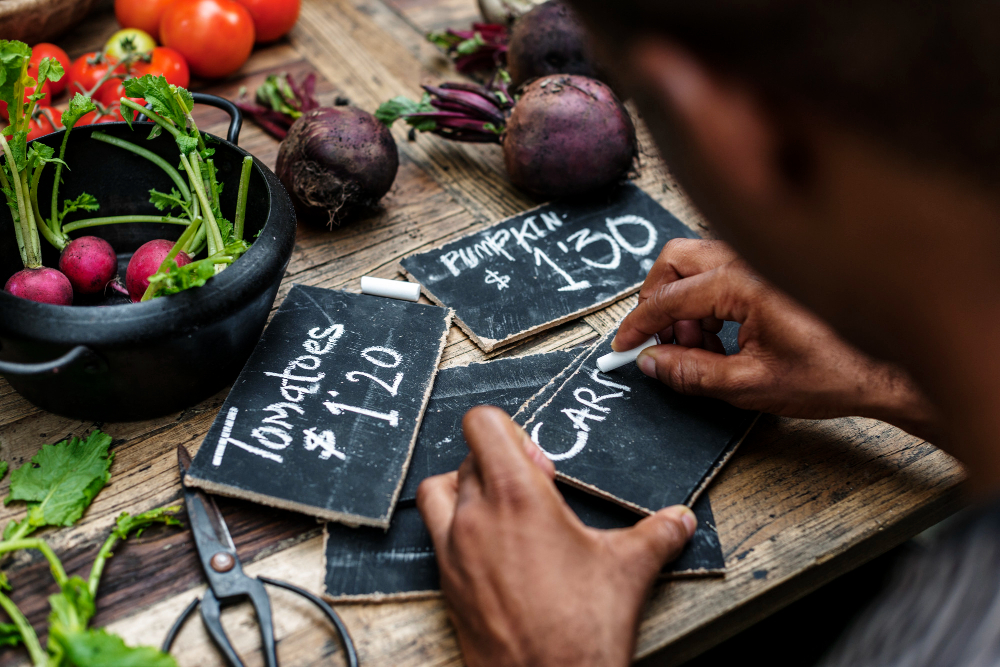
Seasonal ingredients are highly beneficial for restaurants, offering several advantages. You can do marketing ideas with a seasonal menu to create curiosity and interest among customers, which can lead to an increase in profitable food items and potentially reduce portion sizes. Additionally, the cost of seasonal ingredients is not excessive, allowing you to generate more profit with fresh and high-quality ingredients.
Control Portion Sizes
Try to analyse whether the portion of your product is right to achieve the ideal food cost percentage. Sometimes, restaurants implement a marketing strategy to reduce the portion size and price of menu items, making them appear more affordable and thereby attracting new customers. Therefore, portion food has a significant role in food cost because it reduces standard cost while still getting a good profit and impression.
Audit Inventory Regularly
Every purchase and expense of a restaurant must have clear records to enable precise evaluations. This includes tracking ingredient usage, identifying discrepancies, and calculating your food costs to determine more accurate food costs in the future. By conducting regular inventory audits, you can reap numerous benefits, including expanding your restaurant business, improving its operations, and competing effectively in the restaurant industry.
Optimise Energy and Utility Usage
Energy and utility usage are costly, as they run continuously for the restaurant, impacting overall inventory management. Therefore, optimising utility usage, from cooking equipment to refrigeration, can reduce overall operational costs, which in turn indirectly impacts food cost management. Conducting staff training will help restaurant owners make these optimisations.
Source Ingredients Strategically
Try to obtain ingredients strategically, such as through bulk buying to secure better rates or by building relationships with local suppliers. A good relationship with suppliers can benefit your restaurant in several ways, including obtaining ingredients at a lower price, reducing transportation costs, and ensuring the freshness of your raw ingredients.
Frequently Asked Questions
How much do supplies cost for a restaurant?
The cost of supplies for a restaurant varies depending on factors such as location, the size of the establishment, and the total food costs associated with the complexity of the menu. Typically, food supplies account for around 30-35% of total expenses, but this percentage can fluctuate based on seasonality and market conditions.
What is the profit margin for a restaurant?
The average profit margin for a restaurant ranges from 3% to 5%, although this can vary widely based on the type of restaurant, location, and the management’s efficiency in calculating actual costs. Controlling food and labour costs is key to improving profitability.
What is a good ROI for a restaurant?
A good return on investment (ROI) for a restaurant is typically around 15-20%. However, this figure can differ depending on the restaurant’s age, market conditions, and financial strategies related to inventory management. Higher ROI is usually achieved by maximising food and labour cost efficiency while increasing sales.
Conclusion
Calculating and managing food costs, including ingredient cost and food cost per serving, is essential for running a successful restaurant. By understanding your actual food costs, applying the food cost percentage formula, and using the right strategies for cost management, you can optimise your restaurant’s financial health and improve profitability. Whether you’re a new restaurant owner or a seasoned operator, mastering food costs is key to long-term success.
Ready to take your restaurant’s financial strategy to the next level? Visit SEO for Restaurants can help improve visibility and attract customers interested in your restaurant’s unique menu items and food costs!